Drone basics for weekend pilots
Hobby drones come in several types, each with its own learning curve. This overview explains the basics and why practicing in a simulator first makes sense.
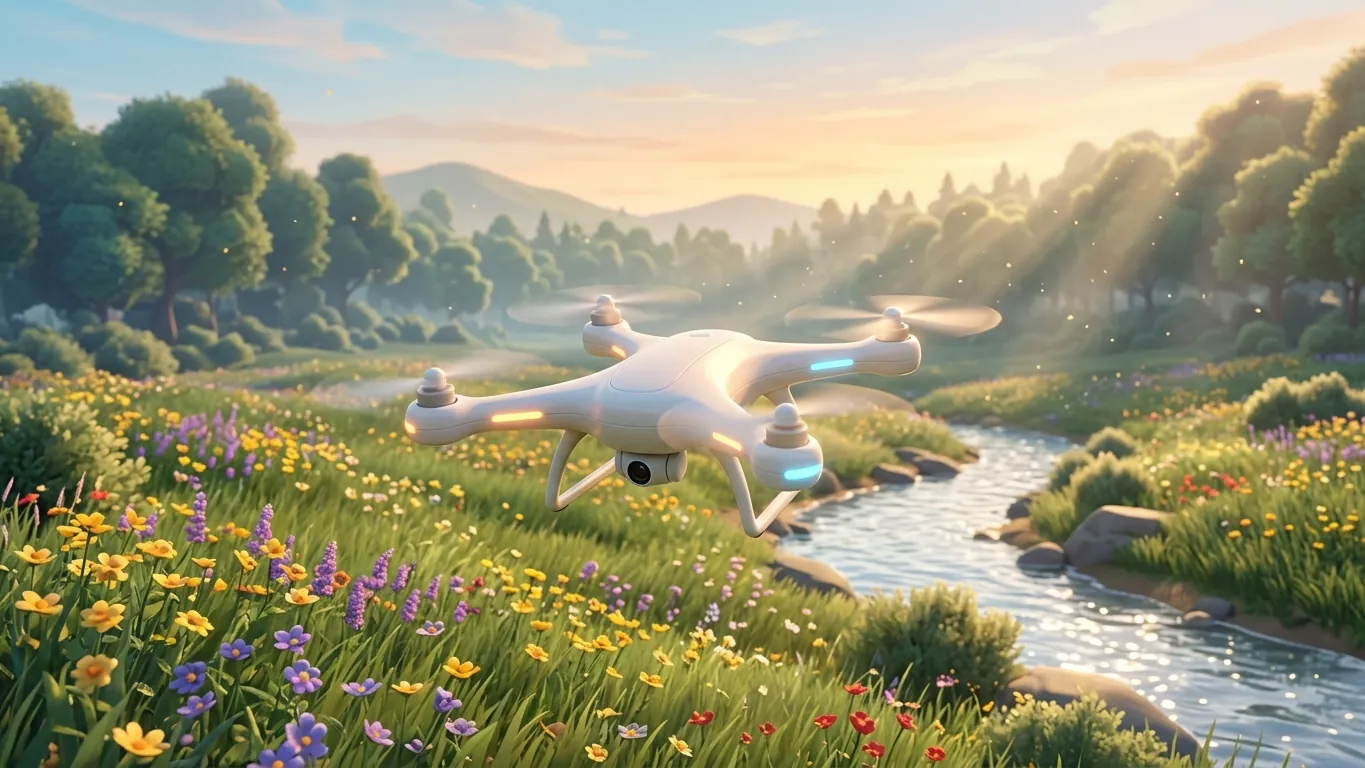
The main types of hobby drones
Most hobby drones are multirotors, usually quadcopters with four propellers. Camera drones are designed for stable, easy flight and typically use satellite positioning and sensors to hold their position automatically. They are the most approachable starting point for many people.
First-person-view drones, often called FPV quads, are built for agility. The pilot watches a live video feed through goggles and controls every movement manually. They are fast and exciting but demand practice. Small indoor drones, sometimes called micro or whoop-style drones, have protected propellers and are popular for practicing in a living room or garage.
There are also fixed-wing drones that fly like airplanes. They are efficient for long flights but cannot hover.
Flight modes and what they do
Many drones offer several flight modes. A position-holding mode keeps the drone in place when you release the sticks, which is ideal for beginners and filming. An angle or self-level mode limits how far the drone can tilt and returns it to level when the sticks are centered, but it does not hold position, so wind can push it around.
An acro or manual mode gives full control with no self-leveling. The drone stays at whatever angle you leave it, which allows flips and fluid movement but requires constant attention. Most FPV pilots eventually fly in this mode. Knowing which mode you are in at any moment is essential, so learn how your controller indicates it.
Why simulators help before the first real flight
Drone simulators connect to the same kind of radio controller you would use outdoors, or to a compatible gamepad. They reproduce the basic physics of a quadcopter in virtual environments such as parks, warehouses and race tracks.
The main benefit is risk-free repetition. You can crash a hundred times while learning to coordinate throttle and yaw, and each crash costs only a restart. This builds the muscle memory that matters most in acro mode. Simulator practice is also valuable for camera drone pilots who want to understand what happens if position holding is unavailable.
Simulators are not perfect. Wind, battery sag and the feeling of a real aircraft nearby are hard to reproduce. Treat them as preparation, not a replacement for careful outdoor practice.

Rules, airspace and respect for others
Flying a drone outdoors is regulated in most countries, including the United States. Rules may cover registration, maximum altitude, flying near airports, flying over people and keeping the drone within visual line of sight. Requirements can change, so check the current guidance from the aviation authority in your country before you fly, and confirm any local park or community restrictions.
Beyond the law, consider privacy and noise. Avoid filming people without their knowledge and choose locations where your flight will not disturb others or wildlife.
Your first outdoor sessions
Pick an open area with no people, trees or power lines nearby and calm weather. Do a preflight check: propellers secure, battery charged and seated, controller connected and the correct flight mode selected. Keep your first flights low and close, practicing gentle hovering, slow movements and controlled landings.
Keep sessions short, land with battery to spare and review what went well. Confidence grows quickly when you build it step by step.
Related articles
 An FPV simulator practice routine
Build a structured FPV drone simulator routine: camera angle, rates, repeatable drills and simple ways to track progress before flying outdoors.
Read more
 First steps with RC model airplanes
A beginner overview of radio-controlled model airplanes: trainer aircraft, battery care, simulator practice, flying sites and simple repairs.
Read more
 Weather and navigation in flight sims
How wind, clouds and visibility affect flying in simulators, plus basic navigation methods like pilotage, dead reckoning and radio aids.
Read more