What simulators teach and what they don't
Simulators are powerful practice tools, but they are not the same as flying for real. This opinion piece looks at both sides honestly.
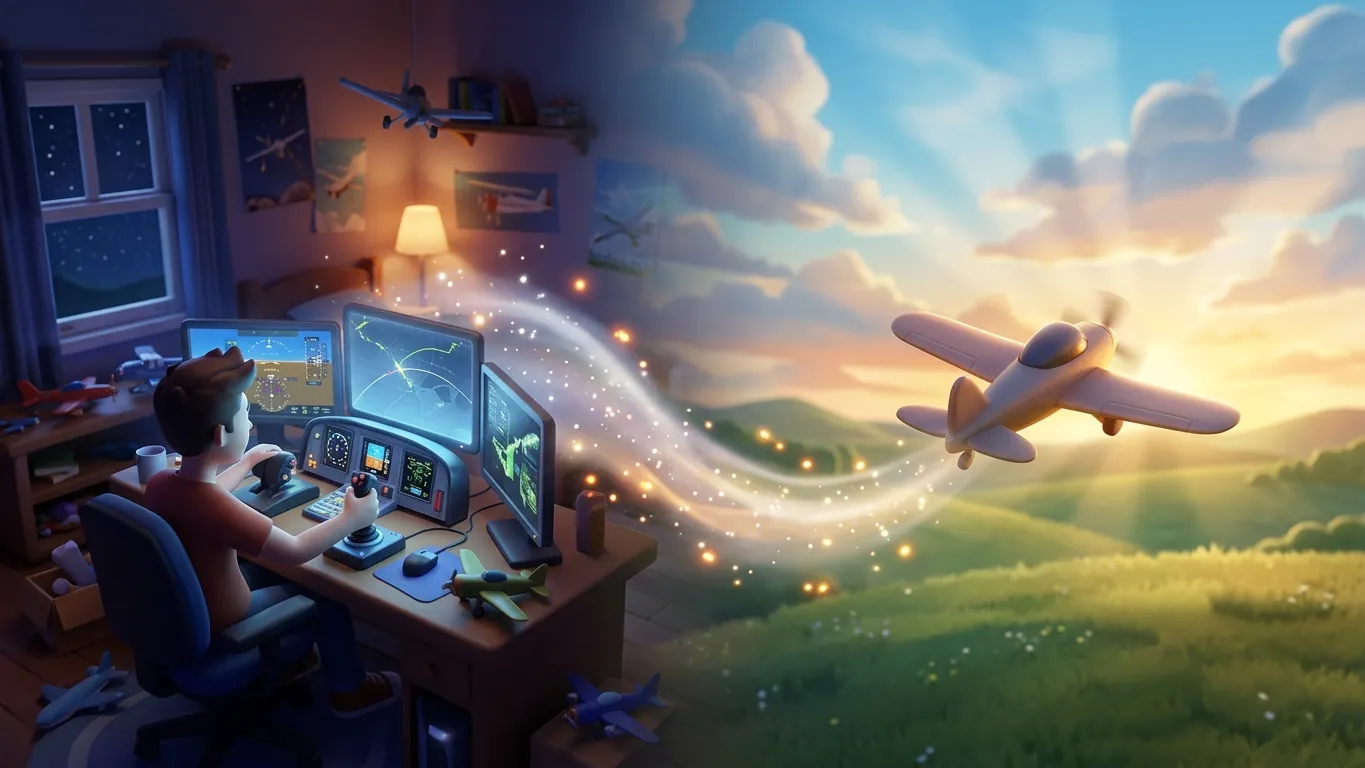
The case for practicing at a desk
The strongest argument for simulators is repetition without consequences. You can fly ten approaches in an hour, crash a drone dozens of times and practice emergencies that would be dangerous in reality. For hobbyists, that freedom is valuable.
Simulators are also excellent teachers of procedure and sequence. Checklists, radio phraseology, traffic patterns and navigation methods can all be learned at a desk. Understanding what to do and in which order frees your attention when you later fly a real drone or model airplane. And they are available whenever you have a free hour, regardless of weather or daylight.
Where simulation falls short
The biggest gap is physical sensation. In a real aircraft, you feel acceleration, vibration and the subtle movements that warn you about turbulence or a developing stall. A home simulator shows these only on a screen. With drones and model airplanes the gap is smaller, since you are on the ground either way, but outdoor wind, glare from the sun and depth perception at a distance still behave differently.
Consequences matter too. Knowing that a crash means repairs or risk to others changes how people fly. Some pilots who are confident in a simulator feel nervous the first time a real aircraft is in their hands. That is normal, and it is worth expecting rather than being surprised by it.
Finally, any simulator is a model. Its physics, weather and system behavior are approximations, and they vary between products.
Habits that transfer well
In my view, the most transferable lessons are habits rather than reflexes. Planning a flight before taking off, checking controls before every session, thinking ahead of the aircraft, choosing a safe landing area and knowing when to abort are all habits a simulator can build.
Stick coordination also transfers, particularly for FPV drones and RC airplanes where the controller in the simulator can be the same one you use outdoors. Orientation skills, such as understanding reversed controls when a model flies toward you, transfer very well. The more closely your simulator setup matches your real equipment, the more of your practice carries over.
A balanced view for hobbyists
Simulators deserve respect as practice tools and as games in their own right. Plenty of people enjoy virtual flying without any wish to fly outdoors, and that is a perfectly complete hobby.
For those who want to fly real drones or models, the most sensible approach is to use simulators for preparation and ongoing practice, then build outdoor experience carefully and within the rules. For anyone considering full-size aviation, it is important to be clear: simulator time at home is not a substitute for training with qualified instructors, and any questions about pilot training should be directed to a certified flight school or the aviation authority in your country.
Used with realistic expectations, simulators make the whole hobby more enjoyable and less intimidating.
Related articles
 Planning a weekend pilot routine
Practical tips for planning hobby time around flight sims, drones and model airplanes, with a sample weekend plan, gear care and a simple logbook.
Read more
 Choosing your first flight sim setup
A practical beginner guide to building a first flight simulator setup: using what you own, picking a sim style and adding controls step by step.
Read more
 Joysticks, yokes and pedals explained
Understand flight sim controls: joysticks versus yokes, rudder pedals, throttle quadrants, calibration and dead zones, explained for hobbyists.
Read more